
Difference Between Web Browser and Web Server – Complete Guide
Introduction
- Start with a simple explanation of how websites work when a user enters a URL.
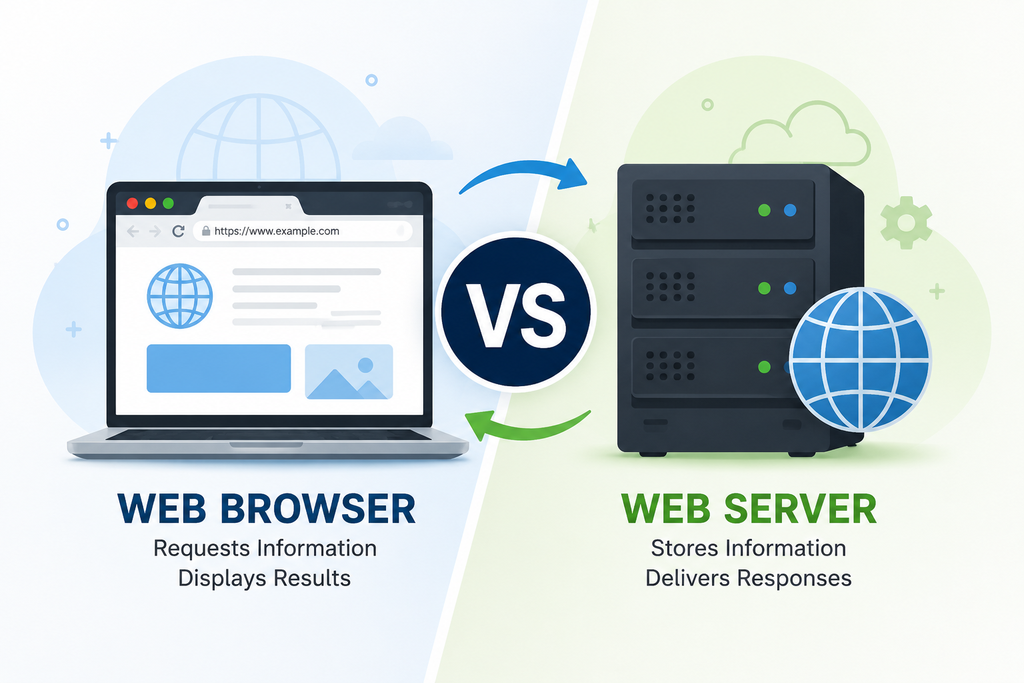
- Introduce the two key components: web browser and web server.
- Explain why knowing the difference between a web browser and a web server is important for beginners, website owners, students, and digital marketers.
- Briefly mention that browsers and servers communicate through the internet using HTTP/HTTPS.
What Is a Web Browser?
Explain what a web browser is in simple, beginner-friendly language.
Key points:
- Software for accessing and viewing websites is called a web browser.
- It sends requests to web servers.
- It receives website files and displays them to users.
- It can process HTML, CSS, JavaScript, images, videos, and other web content.
Examples of Web Browsers
- Google Chrome
- Mozilla Firefox
- Microsoft Edge
- Safari
- Opera
How Does a Web Browser Work?
Explain the process in short steps:
- User enters a website address.
- The browser sends a request.
- The request travels through the internet.
- The web server receives the request.
- The server sends the required files.
- Browser processes and displays the webpage.
What Is a Web Server?
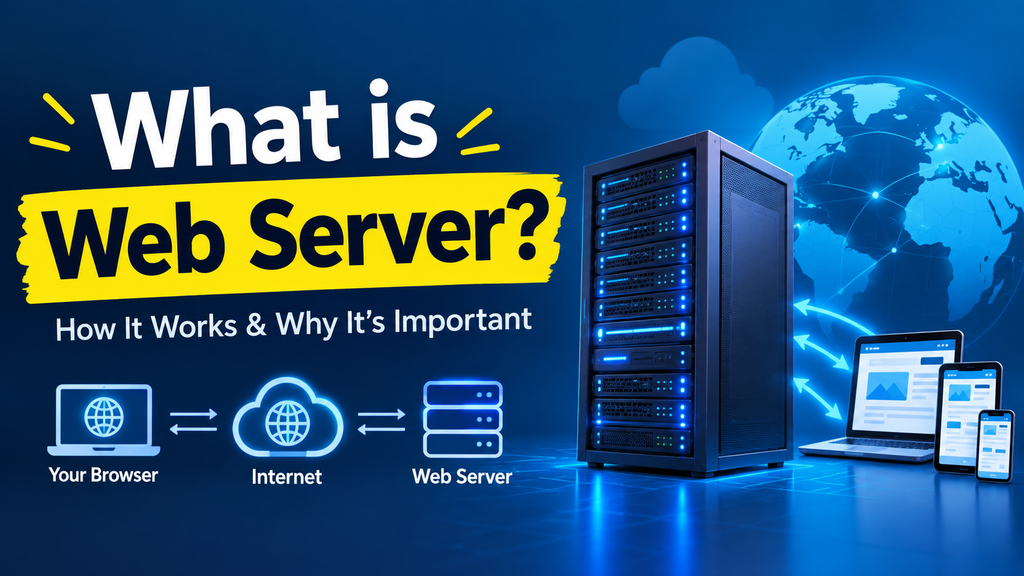
Define a web server in simple terms.
Key points:
- A web server stores and delivers website resources.
- It receives requests from browsers.
- It processes requests and sends appropriate responses.
- It can serve HTML, CSS, JavaScript, images, videos, and other files.
Examples of Web Servers
- Apache
- Nginx
- Microsoft IIS
- LiteSpeed
How Does a Web Server Work?
Explain:
Browser Request → Web Server → Processing → Server Response → Browser
Mention that servers can also communicate with databases and application code when a website requires dynamic content.
Difference Between Web Browser and Web Server
This should be the main section targeting the primary keyword.
Comparison Chart
| Feature | Web Browser | Web Server |
| Main purpose | Accesses and displays websites | Stores and delivers website content |
| Used mainly by | Website visitors | Website owners/developers |
| Location | User’s device | Server/hosting environment |
| Function | Sends requests and displays responses | Receives requests and provides responses |
| Examples | Chrome, Firefox, Safari | Apache, Nginx, IIS |
| Main role | Client | Server |
| Works with | Website content | Website files and requests |
After the chart, explain each difference briefly.
Web Browser vs Web Server: Key Differences Explained
1. Difference in Purpose
Explain that the browser is designed to display web content, while the server is designed to provide web content.
2. Difference in Function
- The browser sends requests.
- The server receives and processes requests.
- The browser displays the response.
- The server delivers the requested resources.
3. Difference in Location
Explain where browsers and servers generally operate.
4. Difference in Users
- Browsers are directly used by visitors.
- Servers are managed by website owners, developers, hosting providers, or administrators.
5. Difference in Examples
Give common browser and server examples.
6. Difference in Communication
Explain how HTTP/HTTPS allows browsers and servers to communicate.
How Web Browser and Web Server Work Together
Explain the complete journey of a website request.
Suggested Chart:
User
↓
Web Browser
↓
Internet / HTTP Request
↓
Web Server
↓
Website Files / Database
↓
HTTP Response
↓
Web Browser
↓
Website Displayed to User
Add a simple real-world example, such as what happens when someone visits your website.
Real-Life Example of Web Browser and Web Server
Use a simple analogy to make the article human-friendly.
Restaurant Analogy
- Customer = Website visitor
- Waiter = Web browser
- Kitchen = Web server
- Food = Website content
Explain that the browser requests information just as a customer requests food, while the server prepares and delivers the requested content.
Why the Difference Between Web Browser and Web Server Matters for Digital Marketing
This section will help connect the informational article with pankajrawat.com’s digital marketing services.
Discuss:
Website Speed
A well-configured server and optimized website can contribute to faster loading.
User Experience
A fast, functional website provides a better experience for visitors.
SEO
Technical website performance, mobile usability, security, and accessibility can all matter to SEO.
Website Security
Explain the importance of HTTPS and secure server configuration.
Conversion Rate
A website that loads properly and provides a smooth experience can make it easier for visitors to take actions such as submitting forms or contacting a business.
End this section with a soft CTA related to website optimization and digital marketing services.
Common Web Browser and Web Server Examples
Popular Web Browsers
- Google Chrome
- Mozilla Firefox
- Microsoft Edge
- Apple Safari
- Opera
Popular Web Servers
- Apache HTTP Server
- Nginx
- Microsoft IIS
- LiteSpeed
Keep this section concise to avoid unnecessary repetition.
Common Misconceptions About Web Browsers and Web Servers
Address beginner questions:
- Is Google Chrome a web server?
- Are a web server and a website the same thing?
- Are web servers and web hosting the same thing?
- Can one computer act as a web server?
- Does every website need a web server?
- Can a browser work without an internet connection?
- Is Apache a web browser?
This section can help capture additional long-tail searches.
Difference Between Web Browser and Web Server: Quick Summary
Provide a short bullet-point summary:
- Browser = client-side software
- Server = a system that provides web resources
- Browser sends requests.
- Server processes requests.
- Server sends responses.
- Browser displays the response.
- Both are essential for accessing websites.
This is useful for readers who want a quick answer.
Frequently Asked Questions (FAQ)
What distinguishes a web server from a web browser?
Give a simple 2–3 sentence answer.
Is Google Chrome a web browser or web server?
Clarify that Chrome is a web browser.
What is an example of a web server?
Mention Apache, Nginx, Microsoft IIS, and LiteSpeed.
How is communication between a web browser and a web server accomplished?
Explain HTTP/HTTPS requests and responses.
Is a web server necessary for a web browser to function?
Explain the distinction between accessing locally stored content and accessing a website hosted online.
Are web servers and web hosting the same thing?
Explain the relationship in beginner-friendly language.
What is the role of a web server?
Describe how it gets requests and provides resources for the webpage.
Which is more crucial, a web server or a web browser?
Explain that they perform different but complementary roles.
Conclusion
- Summarise the distinction between a web server and a web browser.
- Reinforce the simplest explanation:
- A web browser requests and displays information.
- Web server processes requests and delivers information.
- Explain that both work together whenever users access websites.
- Connect the topic back to website performance, SEO, and digital marketing.
- Finish with a natural CTA for readers who want help improving their website and online presence.
Recommended SEO Setup
Primary Keyword:
difference between web browser and web server
Secondary Keywords:
- web browser vs web server
- difference between browser and server
- web browser and web server
- what is a web browser?
- what is a web server?
- how does a web browser work
- how does a web server work
- web browser examples
- web server examples
Suggested SEO Title:
Difference Between Web Browser and Web Server: Complete Guide
Suggested URL Slug:
/difference-between-web-browser-and-web-server/
Suggested Meta Description:
Learn the difference between a web browser and a web server, how they work, key examples, and why both are important for websites and digital marketing.