
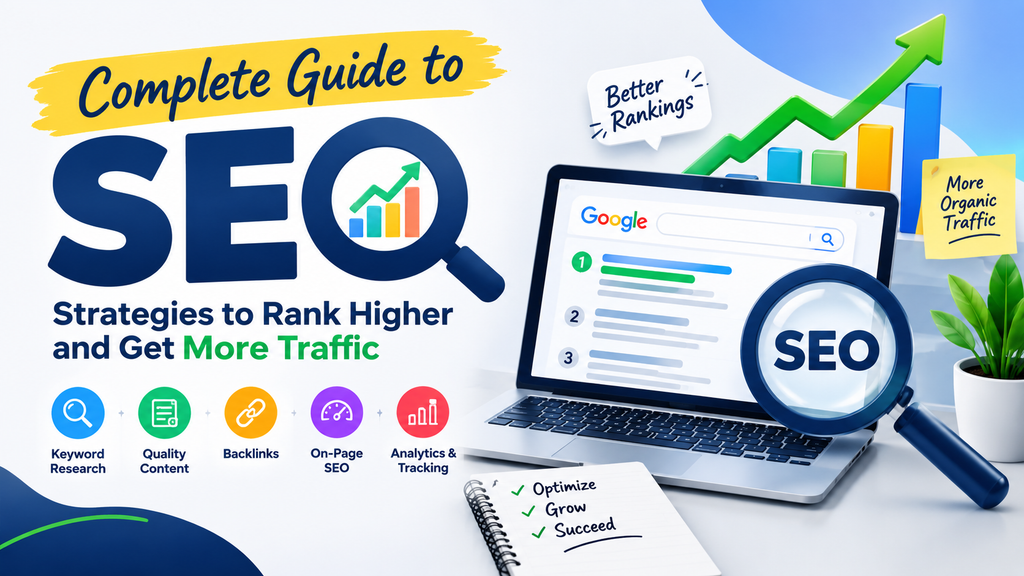
SEO: What Is Search Engine Optimization and How Does It Work?
Introduction
Imagine having a beautiful website, excellent services, and useful information, but hardly anyone can find your website on Google. This is where SEO (Search Engine Optimization) becomes important.
SEO is the process of improving a website so that search engines can better understand its content and users can discover it through relevant searches. For businesses, effective SEO can help attract the right audience, increase website visibility, generate leads, and support long-term online growth.
Whether you own a small business, personal brand, e-commerce website, or professional service website, understanding SEO can help you make better digital marketing decisions.
In this guide, we will explain what SEO is, how SEO works, why SEO is important, different types of SEO, common SEO mistakes, and how businesses can use SEO to grow online.
What Is SEO?
SEO stands for Search Engine Optimization. It is the practice of improving a website’s content, structure, technical performance, and overall online presence to increase its visibility in organic search results.
When someone searches for a product, service, question, or business on Google, the search engine evaluates many signals to determine which pages are most relevant and useful for that search.
Good SEO helps your website communicate clearly with both users and search engines.
For example, if you provide digital marketing services and someone searches for “digital marketing services for small businesses,” an SEO strategy can help your website become more relevant to that search.
SEO commonly involves:
- Keyword research
- High-quality content
- On-page optimization
- Technical SEO
- Internal linking
- Website performance
- Mobile-friendly design
- Relevant backlinks
- Local SEO
- Continuous measurement and improvement
SEO is not simply about adding keywords to a webpage. It is about creating a useful website that satisfies the searcher’s needs.
How Does SEO Work?
Search engines generally need to discover, understand, and evaluate webpages before they can appear in search results.
The basic process includes:
Crawling → Indexing → Ranking
Crawling
Search engine crawlers discover webpages by following links and accessing publicly available content.
Indexing
After discovering a page, a search engine can analyze and store information about that page in its index.
Ranking
When someone performs a search, search engines determine which indexed pages are most relevant to the query and present them in search results.
This means SEO involves much more than targeting a single keyword. Your website should have useful information, logical organization, accessible pages, and content that satisfies the user’s search intent.
Why Is SEO Important for a Website?
A website without visibility can struggle to attract potential customers. SEO can help businesses build that visibility organically.
Some important benefits of SEO include:
- More organic visibility: Your website can appear for relevant searches.
- Targeted traffic: SEO can attract people who are actively searching for related information or services.
- Better user experience: Many SEO improvements also make websites easier to navigate and use.
- Greater credibility: Useful, well-organized content can help establish trust.
- Lead generation: Relevant organic visitors can become inquiries and customers.
- Long-term value: Unlike advertising, SEO can continue generating organic visibility after individual content pieces are published.
- Competitive advantage: A strong SEO strategy can help businesses compete for valuable search terms.
SEO should therefore be viewed as part of a broader digital marketing strategy rather than a quick trick for obtaining rankings.
What Are the Main Types of SEO?
SEO has several important areas. Each area addresses a different part of website optimization.
1. On-Page SEO
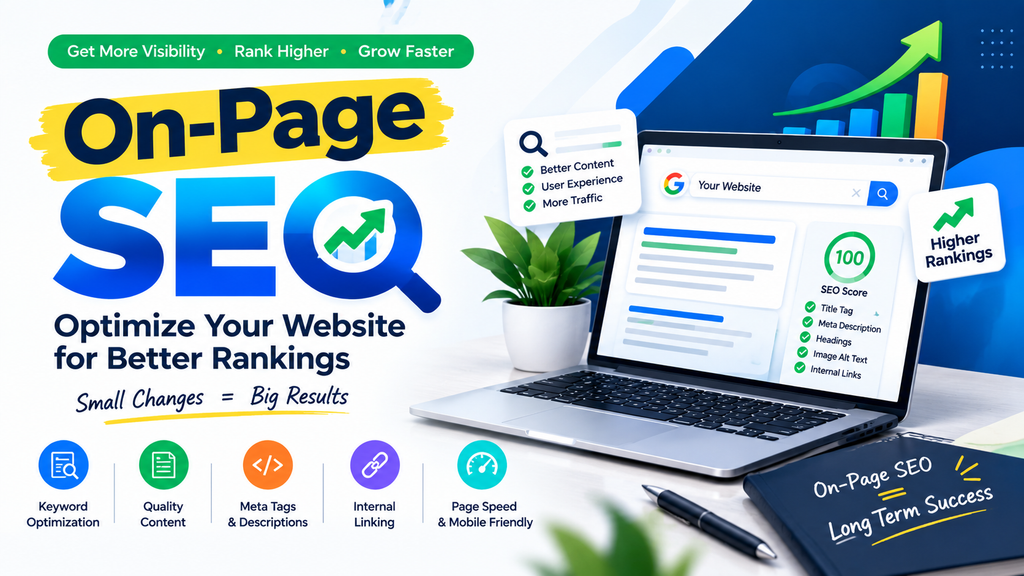
The components that are present on your webpages are the focus of on-page SEO.
Important areas include:
- Page titles
- Headings
- Content
- Keywords
- Meta descriptions
- Internal links
- Images and alternative text
- URLs
- Search intent
The goal is to make each page clear, useful, and relevant to its target audience.
2. Off-Page SEO
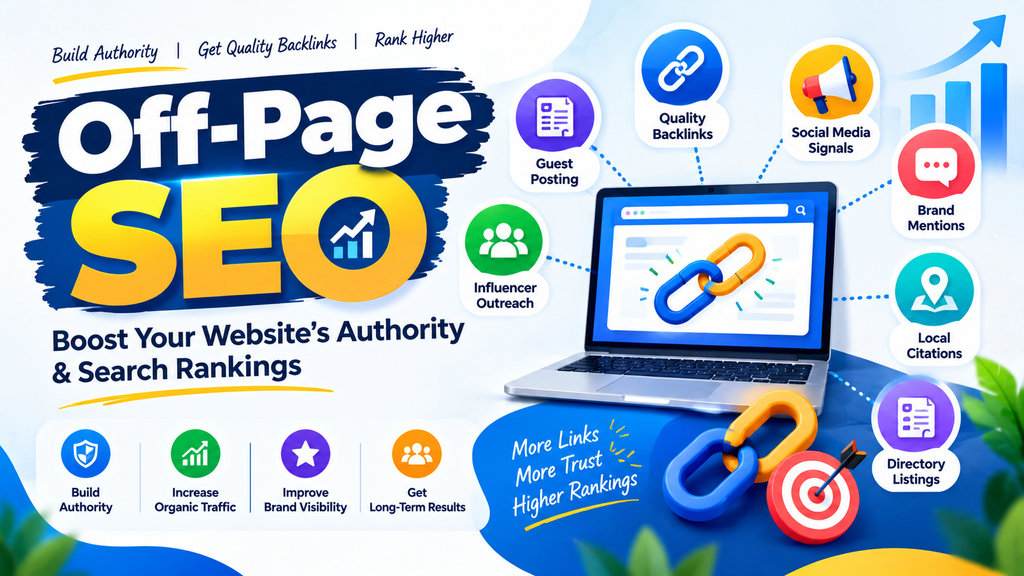
Off-page SEO focuses on signals and activities outside your own website.
One of the best-known examples is earning relevant backlinks from other websites. Other activities can include:
- Digital PR
- Brand mentions
- Relationship building
- Relevant citations
- Reputation development
The focus should be on earning genuine authority rather than manipulating links.
3. Technical SEO
Technical SEO helps search engines access, understand, and process your website effectively.
It can include:
- Website crawlability
- Indexing
- XML sitemaps
- Robots.txt
- HTTPS
- Mobile usability
- Website speed
- Core Web Vitals
- Structured data
- Canonical URLs
Technical SEO can become particularly important as a website grows and develops more pages.
4. Local SEO
Local SEO is particularly useful for businesses that serve customers in specific geographic areas.
Local SEO can involve:
- Google Business Profile
- Local keywords
- Customer reviews
- Business information consistency
- Local citations
- Location-specific content
For example, a digital marketing professional serving businesses in a particular city may benefit from creating useful, locally relevant content rather than trying to target every location.
SEO vs. PPC: What Is the Difference?
SEO and PPC are both useful digital marketing channels, but they work differently.
| SEO | PPC |
| Focuses on organic search visibility | Focuses on paid advertising |
| Usually takes time to build | Can generate visibility quickly |
| Does not charge for every organic click | Advertising costs can be based on clicks or other models |
| Can provide long-term value | Requires ongoing advertising budget |
| Relies heavily on content, relevance, and website quality | Relies on campaign targeting, ads, bids, and landing pages |
Many businesses can benefit from using SEO and PPC together. PPC can provide immediate exposure while SEO builds sustainable organic visibility over time.
How to Start SEO for a New Website
If you are launching a new website, avoid trying to optimize everything at once. Start with a clear process.
Step 1: Understand Your Audience
Identify who you want to reach and what problems they are trying to solve.
Step 2: Perform Keyword Research
Find the words and phrases your potential customers use when searching.
Step 3: Analyze Competitors
Study competing websites to understand what topics they cover and where you can provide something more useful or distinctive.
Step 4: Create Helpful Content
Develop content that answers real questions and provides practical value.
Step 5: Optimize Your Website
Improve titles, headings, URLs, internal links, images, navigation, and other important page elements.
Step 6: Improve Technical SEO
Make sure your key pages are accessible and comprehensible to search engines.
Step 7: Build Authority
Earn relevant mentions and links by creating content and resources that others genuinely want to reference.
Step 8: Measure Results
To find out how well your website is functioning, use tools like Google Search Console and analytics services.
SEO is an ongoing process. Search behavior, competitors, websites, and search systems can change, so regular improvement is important.
Keyword Research and SEO
Keyword research is an important part of SEO because it helps you understand what your audience is searching for.
Instead of targeting only broad keywords, consider using a mixture of:
- Short-tail keywords
- Long-tail keywords
- Question-based keywords
- Service-related keywords
- Location-based keywords
- Informational keywords
- Commercial keywords
For example, “SEO” is a very broad keyword. A more specific search such as “SEO services for small businesses” can indicate a clearer commercial need.
The goal is not to repeat a keyword as many times as possible. The goal is to understand the searcher’s intent and create the best page for that intent.
How to Create SEO-Friendly Content
Good SEO content should be created primarily for people.
A useful SEO-friendly article should:
- Answer the main question clearly
- Use descriptive headings
- Provide original value
- Include relevant keywords naturally
- Use short paragraphs
- Link to useful related pages
- Include helpful examples
- Be easy to scan
- Stay updated when information changes
- Avoid unnecessary repetition
Google’s current guidance emphasizes useful, reliable, people-first content. SEO should support the reader’s experience rather than turn the article into a collection of repeated keywords. Google for Developers
Common SEO Mistakes to Avoid
Many website owners make SEO more complicated than necessary. Some common mistakes include:
- Keyword stuffing
- Creating content only for search engines
- Buying low-quality backlinks
- Publishing duplicate or very thin content
- Ignoring mobile users
- Having a slow website
- Neglecting internal links
- Targeting keywords without understanding search intent
- Expecting immediate results
- Focusing only on rankings instead of business results
Keyword stuffing is particularly important to avoid. Google describes it as filling a webpage with keywords or numbers in an attempt to manipulate search rankings, especially when repetition becomes unnatural. Google for Developers
How Long Does SEO Take to Show Results?
SEO does not normally produce overnight results.
The time required can vary considerably depending on:
- Website authority
- Competition
- Industry
- Content quality
- Technical condition
- Existing backlinks
- Search demand
- Consistency of SEO work
A new website competing for highly competitive searches may need considerable time and consistent effort.
Instead of looking for instant rankings, businesses should monitor progress through organic traffic, impressions, clicks, leads, conversions, and other meaningful metrics.
How to Measure SEO Success
Ranking positions are useful, but they are not the only way to measure SEO.
Important SEO metrics include:
- Organic traffic
- Search impressions
- Click-through rate
- Keyword visibility
- Engagement
- Leads
- Conversions
- Revenue
- Relevant backlinks
For a business, the ultimate objective should be connecting SEO performance with meaningful business outcomes.
A website that receives thousands of irrelevant visitors may be less valuable than a website receiving fewer visitors who are genuinely interested in its products or services.
Should You Do SEO Yourself or Hire an SEO Professional?
Small website owners can learn many SEO fundamentals themselves. Basic tasks such as improving page titles, creating useful content, organizing internal links, and understanding search intent can be handled with the right knowledge.
However, professional SEO support can be valuable when:
- Competition is high
- The website has technical problems
- You need a complete SEO strategy
- You don’t have enough time to manage SEO
- You want ongoing monitoring and optimization
- You need help connecting SEO with business goals
The right approach depends on your website, resources, industry, and objectives.
SEO Services for Businesses
A professional SEO strategy can combine technical improvements, content, keyword research, on-page optimization, and ongoing analysis.
At pankajrawat.com, businesses can explore digital marketing solutions designed to improve their online presence and attract relevant audiences.
SEO services may include:
- SEO audits
- Keyword research
- On-page SEO
- Technical SEO
- Local SEO
- Content strategy
- SEO consulting
- Ongoing SEO management
If your website is not generating enough organic visibility or qualified leads, a well-planned SEO strategy can help identify opportunities for improvement.
Do you want to increase the exposure of your website and draw in more prospective clients? Get in touch to discuss your digital marketing and SEO requirements.
Frequently Asked Questions About SEO
What is SEO in simple words?
SEO is the process of improving a website so that search engines can understand it and users can find it through relevant organic searches.
What is SEO and how does it work?
SEO involves improving website content, structure, technical performance, and online authority so that pages can become more relevant and useful for appropriate search queries.
Why is SEO important?
SEO can help businesses increase organic visibility, attract relevant visitors, build credibility, and generate leads without relying entirely on paid advertising.
What are the four main types of SEO?
The commonly discussed areas are on-page SEO, off-page SEO, technical SEO, and local SEO. These areas address different aspects of improving a website’s search visibility.
How long does SEO take?
There is no universal timeline. Results depend on factors such as competition, website authority, content quality, technical health, and the consistency of SEO work.
Is SEO better than PPC?
Neither is universally better. SEO focuses on organic visibility, while PPC provides paid visibility. Many businesses can benefit from combining both approaches.
Can I do SEO myself?
Yes. Website owners can learn and implement many basic SEO practices themselves. More complex websites and competitive markets may benefit from professional SEO support.
Does SEO really work?
Yes, SEO can be an effective way to build organic visibility and attract relevant traffic when it is based on useful content, sound technical practices, and a clear understanding of search intent.
Conclusion
SEO is more than putting keywords on a webpage. It is a long-term process of making a website more useful, accessible, understandable, and relevant to both users and search engines.
From keyword research and content creation to technical SEO, internal linking, local optimization, and performance measurement, every part of an SEO strategy can contribute to better organic visibility.
For businesses, the real goal should not simply be to rank higher. The goal is to reach the right audience, provide genuine value, generate qualified leads, and grow the business online.
If you are ready to improve your website’s search visibility and build a stronger digital presence, professional SEO and digital marketing support can help you develop a strategy around your specific business goals.
This version is designed to be publishable as a pillar article and gives you natural places to internally link to your upcoming articles on keyword research, on-page SEO, technical SEO, responsive web design, and website speed.
Sources
Pingback: Digital Marketing for Novices: A Comprehensive Guide